
Steel vs Timber Frames: What Builders Should Know
For decades, timber framing has been the standard choice across many residential projects in Australia. But in recent years, steel framing has continued to gain momentum as builders look for greater consistency, durability, and long-term performance.
So when it comes to steel frame vs timber frame, which one is the better option?
The reality is that both systems have their place. The right choice often comes down to the type of project, site conditions, budget considerations, and long-term expectations. Understanding the differences between the two can help builders, developers, and homeowners make a more informed decision.
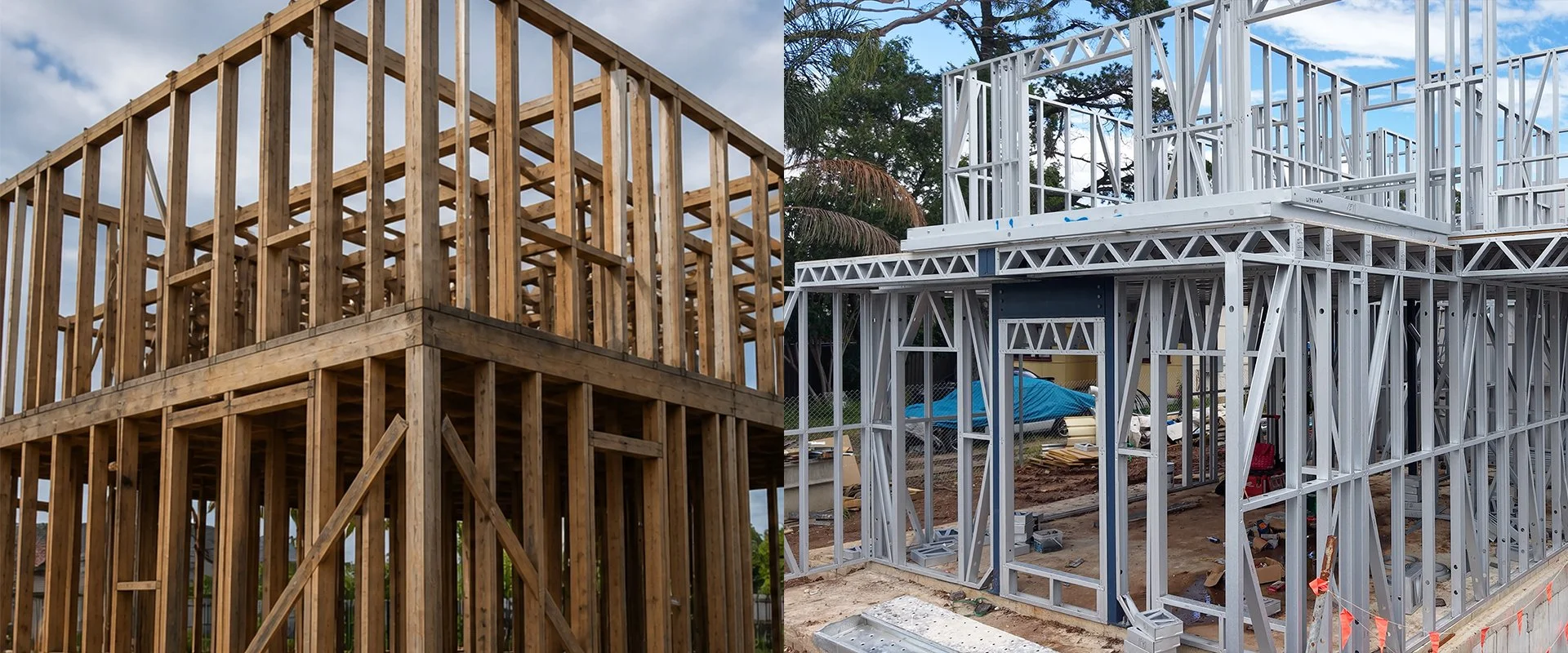
Durability and Stability
One of the biggest advantages of steel framing is consistency.
Steel doesn't shrink, warp, twist, or split over time in the same way timber can. Because it's manufactured to precise specifications, steel framing offers a high level of dimensional accuracy throughout the build.
This can have a flow-on effect across the entire project. Straighter frames often mean smoother installation of wall linings, windows, cabinetry, and finishes later in the construction process.
Timber, on the other hand, remains a proven and widely used building material, but as a natural product, it can be affected by moisture, drying, and movement over time.
Moisture, Pests, and Environmental Exposure
Australian building sites experience a wide range of conditions, from heavy rainfall to high humidity and extreme temperatures.
Steel framing is resistant to termites and is not susceptible to rot or fungal decay. For projects located in termite-prone areas, this can be a significant consideration.
Timber frames may require additional termite management strategies depending on the location and site conditions.
Moisture exposure can also influence material performance. While both systems need appropriate design and installation, steel is generally less affected by moisture-related movement than timber.
Speed and Construction Efficiency
Construction is a sequence. What happens during the structural stage often influences everything that follows.
Prefabricated steel framing systems are designed to improve installation efficiency onsite. Components are manufactured to exact dimensions before arriving on site, helping reduce variations and improving coordination across trades.
Many builders find that accurate framing can simplify later stages such as wall systems, glazing, and internal fit-out.
Timber framing continues to offer flexibility onsite and remains familiar to many construction teams. The experience and preferences of the builder will often play a role in determining which system best suits the project.
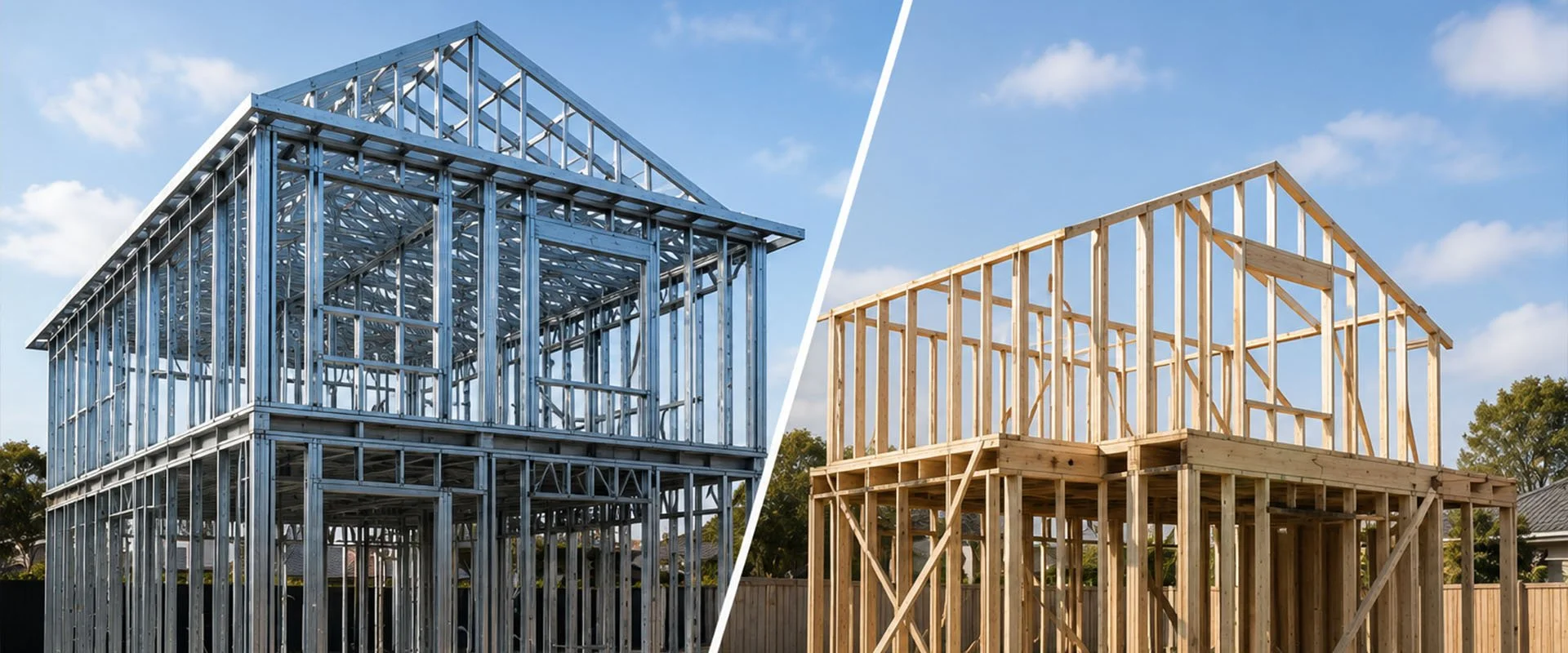
Fire Performance
Fire performance is becoming an increasingly important consideration across many Australian projects.
Steel is non-combustible, which can make it an attractive option for certain applications and building requirements.
This doesn't mean timber cannot be used successfully, but fire performance requirements should always be considered alongside the project's design, location, and relevant building regulations.
Cost Considerations
The conversation around cost is often more complex than simply comparing material prices.
Upfront costs are important, but they're only one part of the picture.
Builders may also consider:
installation efficiency
waste reduction
long-term maintenance
project coordination
durability over the life of the building
Depending on the project, these factors can influence overall value just as much as initial material costs.
Which One Is Right for Your Project?
Both timber and steel framing continue to be used across Australian construction, but more builders are increasingly turning to steel framing as performance expectations continue to evolve.
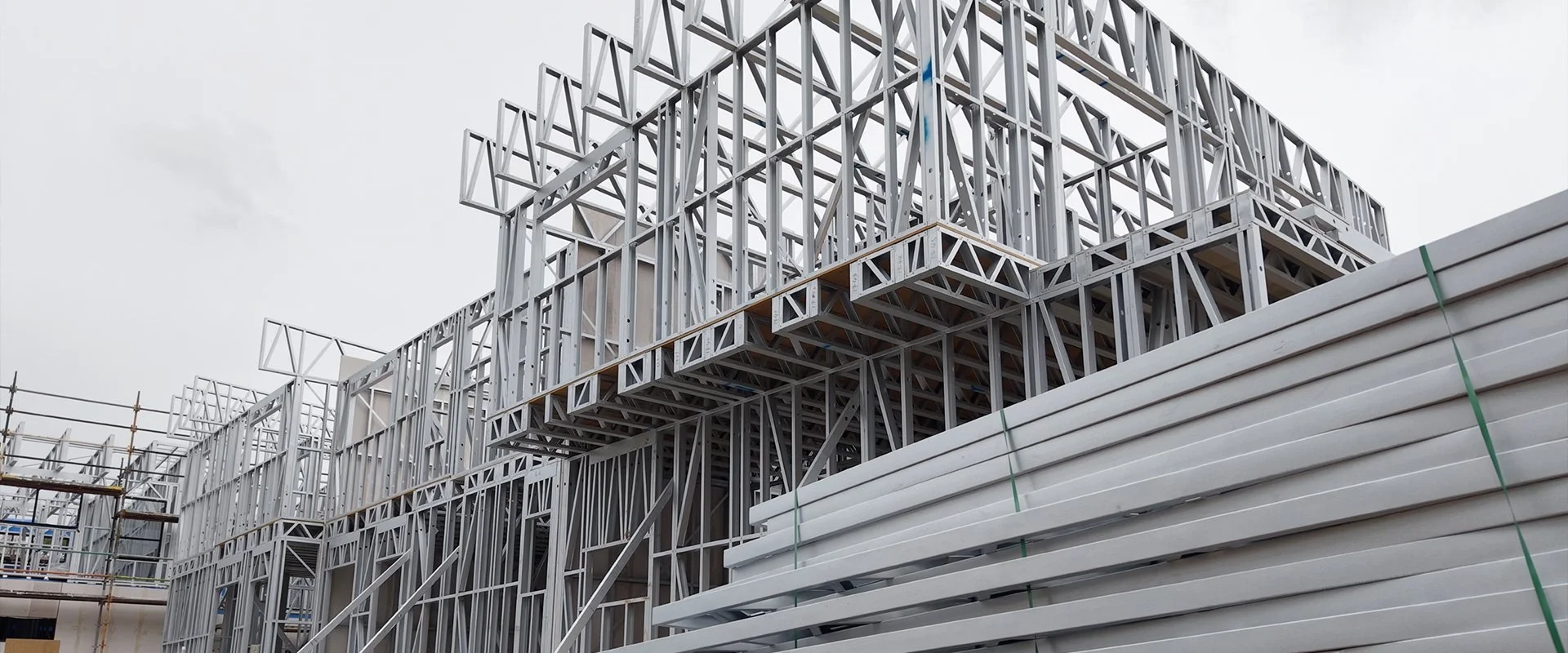
Steel framing offers several advantages that extend beyond the structural stage. Its dimensional accuracy, resistance to termites, durability, and long-term stability can help improve coordination across the entire build, from wall systems and glazing through to internal finishes.
While timber remains a familiar and widely used option, steel framing is becoming the preferred choice for many residential and commercial projects where consistency, efficiency, and long-term performance are priorities.
Ultimately, the right framing system should align with your project's requirements, but for builders looking to minimise movement, improve accuracy, and create a more predictable construction process, steel framing continues to present a compelling long-term solution.
As building standards continue to evolve, framing is no longer just about supporting the structure. It's about supporting every stage that follows, from slab to lock-up and beyond.